Well, I think this is the last post I will be making, and; I really don't know what to say. However, I would like to tell you a very true story that happened just an hour ago. My boyfriend and I were chatting with a group of friends about how to protect your home if a disaster was happening. We went into scenarios such as hurricanes, earthquakes, volcanoes, zombies and even evil robot Ultron's (if you are on the fence on seeing Marvels Avengers: Age of Ultron I suggest you do so). Ultimately, one friend in our group stated "The home you live in needs to be in alignment with the area you are in, it should be seamless with nature and cause as little damage as possible. So that when that kind of havoc happens, you'll still be okay."
My boyfriend quipped, "Organic architecture?"
"Like Frank Lloyd Wright?" I said casually.
"Yeah, exactly!" Cried our first friend.
We continued this discussion until we exhausted all thoughts on how best to build a house that could withstand the hurricane winds, tsunami waves, tornado paths and meteors; and still keep you alive inside.
I thought that was freaking cool because if I didn't do this project, this time period, I wouldn't have known that Franklin Lloyd Wright was a pioneer in that exact idea (well, maybe not so much on that kind of disaster scale, but you get the idea!). So maybe, the whole blog thing was a pretty cool project after all.
Hope you enjoyed it through my rambles and misaligned thoughts!
-Jenna
Saturday, May 2, 2015

Thursday, April 30, 2015
Stumped
So, I kinda feel like I'm scrambling to come up with more material for this blog and I'm kinda coming in short...
However, I found this site:
http://www.historygraphicdesign.com/the-age-of-information/postmodern-design/526-late-modernism
and it encompasses every single thing I have been trying to talk about, way better and much more intellectually stimulating than I have been. I highly encourage everyone to go here and read, if you are interested in this time period.
Enjoy!
However, I found this site:
http://www.historygraphicdesign.com/the-age-of-information/postmodern-design/526-late-modernism
and it encompasses every single thing I have been trying to talk about, way better and much more intellectually stimulating than I have been. I highly encourage everyone to go here and read, if you are interested in this time period.
Enjoy!
Wednesday, April 29, 2015
Pictures, posters and other visuals
Late Modern – mostly known for, distorted geometric shapes, and informal layouts. The only aspect of this style that isn’t informal is the type, which was devoid of decoration. Below you will find popular posters that show exactly this.


This revamping of the ever popular "Hunger Games" saga is done in Late Mod style. Personally, I don't think this works. I do like the eerie cornucopia but the fonts are too playful, not simple enough.


Hope you enjoyed today's post!
http://memory.loc.gov/ammem/wpaposters/wpahome.html
http://www.designishistory.com/
This revamping of the ever popular "Hunger Games" saga is done in Late Mod style. Personally, I don't think this works. I do like the eerie cornucopia but the fonts are too playful, not simple enough.
Hope you enjoyed today's post!
http://memory.loc.gov/ammem/wpaposters/wpahome.html
http://www.designishistory.com/
Tuesday, April 28, 2015
Bits n Pieces
This post will be a lot of cool facts and stuff that I've assembled, in no typical order:
Did you know that Ferdinand Porsche worked for Mercedes and Volkswagon before branching off on his own and making his own super successful company? His cars were known for engineering excellence and simple aesthetic elegance. Sounds like every single car commercial I hear today. I just thought that was interesting.
Last time I wrote about the cutlery, and after a little digging in my mom's basement I found some old table wear setting places. They all had a very distinct organic and simple geometry but very colorful. I thought that was also cool so I figured I'd share.
The IBM typewriter changed the office for the swinging 60's. A light weight, robust, simple typewriter that had an interchangeable ball that had all the letters of the alphabet. The secretaries were so thrilled.
The Olympus Trip 35mm Camera was introduced. Lightweight, compact easy to use. A lot of people found out they had an itch to take pictures. Family vacations have never been the same.
Paul Rand flexed his designing muscles all over town. He developed a unique, distinct, graphic language with wit and simplicity. He's best known for working with Bill Bernbach to make IBM, Westinghouse, UPS and ABC-TV logos. He favored the modern techniques like collages, cut outs and photograms.
With all the improvements in photography, typesetting and printing -- the look of GD changed. Directors started cutting up type and pictures and gluing them to mechanical boards. It reminds me of ransom notes, it's very disjointed (to me).
Designers wanted their work to not leave the viewer passive but wanted to engage them. The goal was to peak the curiosity and use their intelligence and arousal to get the message across.
Yeah, so, that's all I have for today. Check back in tomorrow. Or don't, you never know when I'll post again anyway.
Did you know that Ferdinand Porsche worked for Mercedes and Volkswagon before branching off on his own and making his own super successful company? His cars were known for engineering excellence and simple aesthetic elegance. Sounds like every single car commercial I hear today. I just thought that was interesting.
Last time I wrote about the cutlery, and after a little digging in my mom's basement I found some old table wear setting places. They all had a very distinct organic and simple geometry but very colorful. I thought that was also cool so I figured I'd share.
The IBM typewriter changed the office for the swinging 60's. A light weight, robust, simple typewriter that had an interchangeable ball that had all the letters of the alphabet. The secretaries were so thrilled.
The Olympus Trip 35mm Camera was introduced. Lightweight, compact easy to use. A lot of people found out they had an itch to take pictures. Family vacations have never been the same.
Paul Rand flexed his designing muscles all over town. He developed a unique, distinct, graphic language with wit and simplicity. He's best known for working with Bill Bernbach to make IBM, Westinghouse, UPS and ABC-TV logos. He favored the modern techniques like collages, cut outs and photograms.
With all the improvements in photography, typesetting and printing -- the look of GD changed. Directors started cutting up type and pictures and gluing them to mechanical boards. It reminds me of ransom notes, it's very disjointed (to me).
Designers wanted their work to not leave the viewer passive but wanted to engage them. The goal was to peak the curiosity and use their intelligence and arousal to get the message across.
Yeah, so, that's all I have for today. Check back in tomorrow. Or don't, you never know when I'll post again anyway.
Wednesday, April 22, 2015
Interesting tidbits!
I was reviewing our textbook yesterday trying to refresh and come up with new material when my boyfriend knocked a drawer out of the kitchen and spilled out all the cutlery, and as I was helping him clean it all up, I thought 'I wonder if a fork always looked like a fork, or if the design has changed'. I know that forks and spoons and such have evolved over time. From being a stick, to a prong, to the fork we know today. But I wonder who came up with it? So I did some looking and wouldn't you know, that during the Late Mod Era, some young thing did design new cutlery!
Meet Luigi Caccia who's cutlery is called "the most beautiful cutlery in the world". It evoked a timeless simplicity and elegance. Now, I looked up the purchase price for a set of these bad boys now, a single fork is $20.00 and a whole set is near $2,000.00. For utensils. Is that a rich person thing? Like, I don't really care how fancy the fork is, if I'm hungry I'll use my damn hands if need be. That is so much money to justify. "Oh it can stay in the family!" Really? Head to Target, IKEA, or Sur la Table and get a complete set for $50 bucks and be done. $2,000.00 must be crazy...
It's not even that impressive if you ask me. It's just shiny. Maybe I'm a cynic.
He was also an architect who did some pretty beautiful things in Milan. He created a radio receiver (with associates) that was mass produced. He did the Cassa Caccia Dominioni (which was destroyed), countless churches and urban buildings. He was pretty sweet.
Sorry this is sort of a short post but I just kinda thought I'd share.
Meet Luigi Caccia who's cutlery is called "the most beautiful cutlery in the world". It evoked a timeless simplicity and elegance. Now, I looked up the purchase price for a set of these bad boys now, a single fork is $20.00 and a whole set is near $2,000.00. For utensils. Is that a rich person thing? Like, I don't really care how fancy the fork is, if I'm hungry I'll use my damn hands if need be. That is so much money to justify. "Oh it can stay in the family!" Really? Head to Target, IKEA, or Sur la Table and get a complete set for $50 bucks and be done. $2,000.00 must be crazy...
It's not even that impressive if you ask me. It's just shiny. Maybe I'm a cynic.
He was also an architect who did some pretty beautiful things in Milan. He created a radio receiver (with associates) that was mass produced. He did the Cassa Caccia Dominioni (which was destroyed), countless churches and urban buildings. He was pretty sweet.
Sorry this is sort of a short post but I just kinda thought I'd share.
Monday, April 20, 2015
Architecture!
Yeah, this one time, I was like "oh let's talk about architecture and fashion!" and just talked about fashion...basically, I am super cool.
I did warn you that I was really bad at keeping track of this kind of thing. I hate blogs. I think they're pretentious and tedious. I think I'm just bad at this technology age? Oh well, anyway!
So, the Late Mod era had some really beautiful structures that were built. We had 2 super ahead of their time architects that were really into making new stuff. SIDE NOTE: Pretty sure I've talked about 3 people now. Dior, Lloyd-Wright and Eames so I think I need to talk about one other person to meet the criteria for this project, for designers). Let's get started!
Frank Lloyd Wright was a superstar, born in 1867 and dying in 1959. He lead the way for other artists (in all mediums not just architecture) to make a personal signature style. He, himself is best known for the Falling Water house erected in 1937. It was built as a weekend get-away retreat for a client, but the way he merged nature with man, is something you have to see to believe. It is a seamless design of form dictating function, it is also just breathtaking! The man-made forms that he built around the natural structure of the surroundings...it is the most beautiful home I've ever seen.
Why yes, I would like to sign over my first born to have this house legally changed over to my possession and never be bothered by humanity again!
So more about this Frank guy! He designed 1,000 structures 532 were completed. Dude just didn't take a break. He believe in designing structures that would be in harmony with nature (SEE ABOVE!) and called it 'organic architecture'. The philosophy was simple, don't screw up the world if you don't have to. He was a leader of the Prairie School movement (I'll explain!) and developed the concept of Usonian home (will explain, be patient!), which encompassed what he thought was a unique vision of urban planning in and for the US.
His work includes original and innovative examples of many types: offices, churches, schools, skyscrapers, hotels, museums, and homes. He also enjoyed designing the interior like furniture and stained glass windows. In 1991 he was named the 'greatest American architect of all time.'
'Prairie School Movement - A late 19th and 20th century style most common in the Midwestern US. The style is usually marked by horizontal lines, flat or hipped roofs with brood overhanging eaves, windows groupd in horizontal bands, integration with the landscape and solid construction, integration with the landscape, solid construction, craftsmanship and discipline in the use of ornament. Horizontal lines were made to evoke and relate to the prairie landscape and was developed in sympathy with the ideals and design aesthetic of the Arts and Crafts movement which started in England. It was meant to embrace the handcrafting and craftsman that is lost when introducing an assembly line, mass production and manufacturing, which they felt created inferior products and dehumanized the workers.'
'Usonian was a word used by Wright to refer to his vision for the landscape of the US, including the planning of cities and buildings. He proposed the use of the adjective USONIAN in place of AMERICAN to describe the particular New World character of the American landscape as disctinct and free of previous architectural conventions.'
(THIS WAS ALL FROM WIKIPEDIA I HAVE NO IDEA HOW TO SAY THIS BETTER)


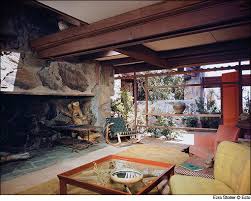

I'm not picky. I'll take ANY of these house and interiors, all of which he personally designed.
I mean seriously? Come on. Please?
Charles and Ray Eames
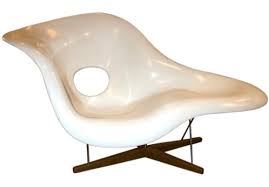
This husband and wife duo made some pretty massive strides. They made everything, short films, designed architecture, furniture and industrial design. Not trying to brag, but they were kind of a big deal. The "Eiffel Tower chair" is a hallmark of their simple, form to function design. It is the first plastic chair to EVER be mass produced. Wild, right?

Thing hasn't changed in years. I had one in my room as a teenager. I'd fall out of it all the time, but I loved it. And clearly, it hasn't changed much. I still see this damn chair in IKEA, Walmart, Target, name it.
Any who, so, Ray and Charles!
Charles went to Washington University in St. Louis on an architecture scholarship and left after 2 years. It's mixed on why he left, there's some interesting theories such as his views were "too modern" and others that say "he support Frank Lloyd Wright too much" (like, how is that even a thing? Yeesh.)
He (and his second wife, Ray) created some pretty amazing things. But some of his most famous work is the Eames house, which is still a landmark for modern architecture. They also made textiles, furniture, designed magazine covers and basically, made other designers feel pretty useless.



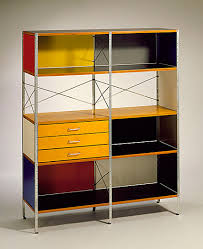
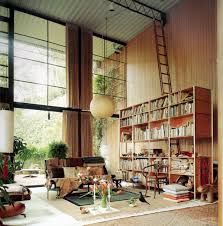

The Eames house. Seriously? Come on. This just makes me hate my apartment more.
Hope this was enjoyable! Again, I used the internet, and our textbook for source info and material.
I did warn you that I was really bad at keeping track of this kind of thing. I hate blogs. I think they're pretentious and tedious. I think I'm just bad at this technology age? Oh well, anyway!
So, the Late Mod era had some really beautiful structures that were built. We had 2 super ahead of their time architects that were really into making new stuff. SIDE NOTE: Pretty sure I've talked about 3 people now. Dior, Lloyd-Wright and Eames so I think I need to talk about one other person to meet the criteria for this project, for designers). Let's get started!
Frank Lloyd Wright was a superstar, born in 1867 and dying in 1959. He lead the way for other artists (in all mediums not just architecture) to make a personal signature style. He, himself is best known for the Falling Water house erected in 1937. It was built as a weekend get-away retreat for a client, but the way he merged nature with man, is something you have to see to believe. It is a seamless design of form dictating function, it is also just breathtaking! The man-made forms that he built around the natural structure of the surroundings...it is the most beautiful home I've ever seen.
Why yes, I would like to sign over my first born to have this house legally changed over to my possession and never be bothered by humanity again!
So more about this Frank guy! He designed 1,000 structures 532 were completed. Dude just didn't take a break. He believe in designing structures that would be in harmony with nature (SEE ABOVE!) and called it 'organic architecture'. The philosophy was simple, don't screw up the world if you don't have to. He was a leader of the Prairie School movement (I'll explain!) and developed the concept of Usonian home (will explain, be patient!), which encompassed what he thought was a unique vision of urban planning in and for the US.
His work includes original and innovative examples of many types: offices, churches, schools, skyscrapers, hotels, museums, and homes. He also enjoyed designing the interior like furniture and stained glass windows. In 1991 he was named the 'greatest American architect of all time.'
'Prairie School Movement - A late 19th and 20th century style most common in the Midwestern US. The style is usually marked by horizontal lines, flat or hipped roofs with brood overhanging eaves, windows groupd in horizontal bands, integration with the landscape and solid construction, integration with the landscape, solid construction, craftsmanship and discipline in the use of ornament. Horizontal lines were made to evoke and relate to the prairie landscape and was developed in sympathy with the ideals and design aesthetic of the Arts and Crafts movement which started in England. It was meant to embrace the handcrafting and craftsman that is lost when introducing an assembly line, mass production and manufacturing, which they felt created inferior products and dehumanized the workers.'
'Usonian was a word used by Wright to refer to his vision for the landscape of the US, including the planning of cities and buildings. He proposed the use of the adjective USONIAN in place of AMERICAN to describe the particular New World character of the American landscape as disctinct and free of previous architectural conventions.'
(THIS WAS ALL FROM WIKIPEDIA I HAVE NO IDEA HOW TO SAY THIS BETTER)
I'm not picky. I'll take ANY of these house and interiors, all of which he personally designed.
I mean seriously? Come on. Please?
Charles and Ray Eames
This husband and wife duo made some pretty massive strides. They made everything, short films, designed architecture, furniture and industrial design. Not trying to brag, but they were kind of a big deal. The "Eiffel Tower chair" is a hallmark of their simple, form to function design. It is the first plastic chair to EVER be mass produced. Wild, right?
Thing hasn't changed in years. I had one in my room as a teenager. I'd fall out of it all the time, but I loved it. And clearly, it hasn't changed much. I still see this damn chair in IKEA, Walmart, Target, name it.
Any who, so, Ray and Charles!
Charles went to Washington University in St. Louis on an architecture scholarship and left after 2 years. It's mixed on why he left, there's some interesting theories such as his views were "too modern" and others that say "he support Frank Lloyd Wright too much" (like, how is that even a thing? Yeesh.)
He (and his second wife, Ray) created some pretty amazing things. But some of his most famous work is the Eames house, which is still a landmark for modern architecture. They also made textiles, furniture, designed magazine covers and basically, made other designers feel pretty useless.
The Eames house. Seriously? Come on. This just makes me hate my apartment more.
Hope this was enjoyable! Again, I used the internet, and our textbook for source info and material.
Monday, April 13, 2015
Fashion!
So, remember that time I was like, "Yeah, I'll post again tomorrow..." and didn't? Yeah? Me too.
I want to talk about things like, buildings that began popping up in the Late Mod time of domination and the clothes and the stuff. There were very new ways of thinking being presented so it's no surprise that we got some very cool looking new buildings and some daring clothes. Don't you think?
I want to talk about clothes first because I like fashion and I wish I was a supermodel.
One of my favorites, Christian Dior, got a pretty epic start going into the 40's and 50's. His new look struck a mighty high cord in fashion and he became the IT man. His looks inspired the rock and roll skirts that all the teens were wearing. His passion for simplicity showed through in all the high fashion he produced.
The mini skirt of the 60's represented a new relaxed attitude towards the body. Which is pretty neat considering all the BS woman dealt with (and still do!) about what we wear or want to wear. Doesn't that just piss you off? Anyway, the mini skirt was a time changer. Especially after Mary Quant's little London Boutique "Bazaar" kept showing it off.
Back to Dior, Did you know he'd have been 100 in 2005? Wild right? Anyway, in 1947 Life magazine called his fresh ideas "the New Look" and declared it would be here to stay. It was a separate look from the military fierceness from WWII and it was a welcome change. Then we had the Glamour Years! Hollywood has been setting the stage for fashion and style icons since the silent movies. But, once the 50's really took off, it changed. The actors lived in a world of glamour on and off set. Not to say that they weren't already controlling what the hair, make-up and clothing trends were before this, but the 50's brought everything in vibrant color, fueling the fascination for film goers. After WWII, Hollywood did it's part to bring the nation back together, bonding us over a mutual love of an ideal image to project to the world that said, "We made it and we are still going forward." If set a standard and groomed the ideas for looks to follow. The elegance and timeless look that the stars of the 50's had can not be pulled off as easily by the stars now. They just don't have 'it', in my opinion anyway...The best survivor of the starlet era for the glitz and glam would be Joan Collins.
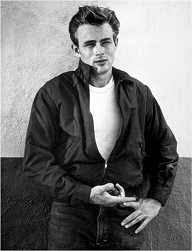
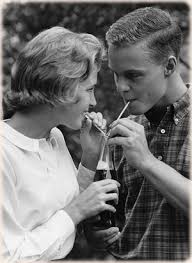
The 50's had the best music. The Rock n Roll Era! Fashion moved away from what mom and dad wore to focusing on what the teens wore. Yong women and men were officially coined 'teenagers' and they set about torching the world with their forward ideas and rebellion. The teens were eager to show that they were not their parents, they were a new breed all together. James Dean and Elvis let parents know their sons were going to be angst ridden, rebellious and beautiful in their jeans and leather jackets. Girls gave their parents nightmares with their skirts and their jive dancing.
That isn't to say that NYC was the only capital of fashion though. It was the epicenter of art in general! Fashion, advertising, graphic design, music, architecture! Everything was bustling. But in 1966, when that mini skirt came across the pond from "Swinging London" -- those baby boomers changed the world. The Beatles stole the hearts of the American public and the rest is history. Some historians say that 'Britain had its finger on the pulse of the new fashion era'. It's so strange to see the baby boomers now, as they chastise the young for being to rebellious or disobeying when they wrote the book on how to do just that. I digress.
The age of the hippy happened too. The 60's brought flowers, peace signs, and protests lit the streets.
Garments from far away places (like the middle and far east) became the uniform of a generation. Afghan coats, Romanian and Indian peasant embroidery, cheesecloth, safari and Nehru jackets to Art Nouveau, flower power made the the hippies! It trickled down into Yves St. Laurent and reached a mass market nobody thought of.
Well, is that enough for the fashion of the late modern era? I was going to go into the buildings and stuff but I kinda feel tired from the typing. So, sit with this and maybe, just maybe I'll remember to post again tomorrow.
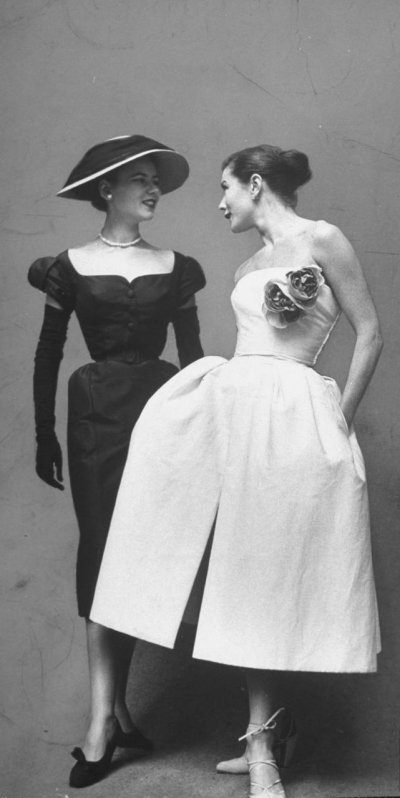

 anybody else see Cersei Lannister in this dress design? Open shoulders? No? Maybe?



I got a lot of material from:
http://gds.parkland.edu/gds/!lectures/history/1945/latemodern.html
http://www.fashion-era.com/fashion_eras.htm#1947-1970
and of course the handy dandy google and wikipedia
I want to talk about things like, buildings that began popping up in the Late Mod time of domination and the clothes and the stuff. There were very new ways of thinking being presented so it's no surprise that we got some very cool looking new buildings and some daring clothes. Don't you think?
I want to talk about clothes first because I like fashion and I wish I was a supermodel.
One of my favorites, Christian Dior, got a pretty epic start going into the 40's and 50's. His new look struck a mighty high cord in fashion and he became the IT man. His looks inspired the rock and roll skirts that all the teens were wearing. His passion for simplicity showed through in all the high fashion he produced.
The mini skirt of the 60's represented a new relaxed attitude towards the body. Which is pretty neat considering all the BS woman dealt with (and still do!) about what we wear or want to wear. Doesn't that just piss you off? Anyway, the mini skirt was a time changer. Especially after Mary Quant's little London Boutique "Bazaar" kept showing it off.
Back to Dior, Did you know he'd have been 100 in 2005? Wild right? Anyway, in 1947 Life magazine called his fresh ideas "the New Look" and declared it would be here to stay. It was a separate look from the military fierceness from WWII and it was a welcome change. Then we had the Glamour Years! Hollywood has been setting the stage for fashion and style icons since the silent movies. But, once the 50's really took off, it changed. The actors lived in a world of glamour on and off set. Not to say that they weren't already controlling what the hair, make-up and clothing trends were before this, but the 50's brought everything in vibrant color, fueling the fascination for film goers. After WWII, Hollywood did it's part to bring the nation back together, bonding us over a mutual love of an ideal image to project to the world that said, "We made it and we are still going forward." If set a standard and groomed the ideas for looks to follow. The elegance and timeless look that the stars of the 50's had can not be pulled off as easily by the stars now. They just don't have 'it', in my opinion anyway...The best survivor of the starlet era for the glitz and glam would be Joan Collins.
The 50's had the best music. The Rock n Roll Era! Fashion moved away from what mom and dad wore to focusing on what the teens wore. Yong women and men were officially coined 'teenagers' and they set about torching the world with their forward ideas and rebellion. The teens were eager to show that they were not their parents, they were a new breed all together. James Dean and Elvis let parents know their sons were going to be angst ridden, rebellious and beautiful in their jeans and leather jackets. Girls gave their parents nightmares with their skirts and their jive dancing.
That isn't to say that NYC was the only capital of fashion though. It was the epicenter of art in general! Fashion, advertising, graphic design, music, architecture! Everything was bustling. But in 1966, when that mini skirt came across the pond from "Swinging London" -- those baby boomers changed the world. The Beatles stole the hearts of the American public and the rest is history. Some historians say that 'Britain had its finger on the pulse of the new fashion era'. It's so strange to see the baby boomers now, as they chastise the young for being to rebellious or disobeying when they wrote the book on how to do just that. I digress.
The age of the hippy happened too. The 60's brought flowers, peace signs, and protests lit the streets.
Garments from far away places (like the middle and far east) became the uniform of a generation. Afghan coats, Romanian and Indian peasant embroidery, cheesecloth, safari and Nehru jackets to Art Nouveau, flower power made the the hippies! It trickled down into Yves St. Laurent and reached a mass market nobody thought of.
Well, is that enough for the fashion of the late modern era? I was going to go into the buildings and stuff but I kinda feel tired from the typing. So, sit with this and maybe, just maybe I'll remember to post again tomorrow.
anybody else see Cersei Lannister in this dress design? Open shoulders? No? Maybe?I got a lot of material from:
http://gds.parkland.edu/gds/!lectures/history/1945/latemodern.html
http://www.fashion-era.com/fashion_eras.htm#1947-1970
and of course the handy dandy google and wikipedia
Subscribe to:
Posts (Atom)